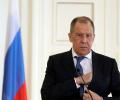
Russian Foreign Minister Sergey Lavrov will be on a two-day official visit to India from Thursday, his first trip to the country since Moscow launched its invasion of Ukraine last month.

National Security Advisor Ajit Doval stated that India-China relations have shown an "upward trend" in the past nine months, with peace prevailing along the Line of Actual Control (LAC). This statement was made during talks with Chinese Foreign Minister Wang Yi on the boundary issue, ahead of Prime Minister Modi's visit to China for the SCO summit.

The BRICS summit in New Delhi brings together leaders from major emerging economies to address global challenges like trade disputes, geopolitical upheavals, and the economic impact of conflicts in Ukraine and West Asia. India, as chair, aims to position BRICS as an economic growth engine, focusing on the Global South's food, energy, and supply chain security. The summit also highlights the grouping's expansion and its growing influence in global governance.

A Kishore Kumar song, a birthday cake, a prince's break from protocol to thank his driver, a Persian painting on the ceiling of the presidential residence -- the BRICS Summit had many memorable moments.
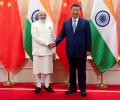
Chinese Foreign Minister Wang Yi has called on India and China to view each other as partners rather than rivals, emphasising the importance of cooperation for regional stability and development.

US Secretary of State Marco Rubio met with Pakistan's Foreign Minister Ishaq Dar amid American demand that countries mediating the peace talks with Iran join the Abraham Accords and establish diplomatic and economic ties with Israel.

Chinese foreign ministry spokesperson Mao Ning said that the country believes that dialogue and negotiation are the only viable solutions to resolving disputes and that the continued escalation of the conflict serves no one's interests.

BRICS nations have successfully reached a consensus on a joint statement following extensive negotiations, with India playing a crucial role in bridging differences, particularly among West Asian members like Iran, Saudi Arabia, and the UAE, despite regional conflicts and geopolitical tensions.

Nepal is grappling with a deepening flood crisis as the death toll from devastating flash floods in Rasuwa and surrounding districts has tragically risen to 538, with authorities now warning of a fresh flood threat and initiating evacuations.
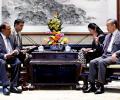
Chinese Foreign Minister Wang Yi will visit India for border talks with NSA Ajit Doval, ahead of PM Modi's visit to China for the SCO summit. The visit aims to improve bilateral ties after recent tensions.

Pakistan has backed China's claim that Beijing played a role in defusing tension with India during Operation Sindoor, calling it 'diplomacy for peace' that was part of international efforts.

Nepal is grappling with one of its worst disasters in recent years as massive flash floods, triggered by an ice avalanche, have claimed 270 lives and left thousands missing across multiple districts, prompting urgent rescue and relief operations.

India is hosting the 18th BRICS Summit in New Delhi, bringing together numerous world leaders including presidents from China, Russia, South Africa, Iran, and Egypt, along with prime ministers and foreign ministers from other nations. The summit will feature bilateral talks and highlights the expanded BRICS grouping's growing global influence and India's significant role as a founding member and current chair.

The successful hosting of the 18th BRICS summit in New Delhi has provided a significant boost to the BJP, offering a timely opportunity to strengthen its narrative against the opposition ahead of crucial assembly elections next year. BJP sources highlight the BRICS grouping's strong condemnation of the Pahalgam terror attack and the consensus declaration as major diplomatic victories for the Modi government, countering criticisms of its foreign policy. The party plans to leverage these outcomes during its month-long Seva Sankalp campaign to connect with various sections of society.

China and Pakistan have jointly proposed a five-point peace plan to address the ongoing conflict in West Asia, focusing on de-escalation and safe passage through the Strait of Hormuz.

"China has been promoting peace and stability in this region. We hope that Pakistan and India will maintain friendly relations," he told a media briefing in Beijing.

China has called on Iran to reopen the Strait of Hormuz and expressed appreciation for Tehran's commitment not to develop nuclear weapons, a key demand of the US to end the conflict.

The water levels in the Bhotekoshi River rose again on Sunday, days after a devastating flash flood struck Nepal, authorities warned, urging residents and rescue personnel in flood-hit districts to remain alert.

A senior cryosphere specialist has warned of a potential secondary flash flood in Nepal due to debris from an ice-rock avalanche accumulating at a river confluence, creating a temporary dam that is collecting water.

India's UPI International payment system is now playing a crucial role in humanitarian efforts, enabling seamless disaster relief donations from Indian users to Nepal's Prime Minister Disaster Relief Fund, showcasing its growing global acceptance and utility beyond tourism. UPI IMAGE: Kindly note that this image has been posted for representational purposes only. Photograph: Unsplash Key Points UPI International, initially for Indian tourists, is now facilitating disaster relief donations to Nepal's Prime Minister Disaster Relief Fund. The embassy of Nepal in India is actively encouraging Indian users to utilise their UPI apps for these contributions. This marks a significant shift, expanding UPI's cross-border use case beyond tourism to include inbound collection for foreign governments. The move positions UPI International alongside global payment giants like Alipay+ and UnionPay for international aid. Donors need to activate the UPI International feature on their apps to transact, with amounts converted from INR to NPR.

A massive flash flood originating in Tibet has devastated central Nepal, killing 17 people and leaving nearly 500 missing, including 105 Indians. The deluge, caused by a rock slide near the Nepal-Tibet border, swept through districts, washing away bridges and severely damaging at least a dozen hydropower projects.

National Security Advisor Ajit Doval is in Beijing for the 25th round of Special Representatives talks on the India-China boundary issue with his Chinese counterpart Wang Yi. These crucial discussions precede Chinese President Xi Jinping's anticipated visit to India for the BRICS summit, offering a potential opportunity for a meeting with Prime Minister Narendra Modi. The talks aim to address the long-standing border dispute and recurring tensions, with both sides emphasising the importance of peace and tranquillity for bilateral relations amidst recent reports of aggressive Chinese posturing in Arunachal Pradesh.

'The Chinese military cannot advance much in Ladakh, even if they want to.' 'Similarly, in Arunachal Pradesh, they can rename a village or two, intrude here or there, but cannot do much more realistically.'

Nepali Prime Minister Balendra Shah held his first one-on-one meeting with Indian Ambassador Naveen Srivastava, signalling a shift towards direct diplomacy after previously preferring group interactions. The discussion focused on strengthening bilateral ties, development partnerships, and mutual interests between India and Nepal.

India has strongly criticised Pakistan at a UN Security Council meeting, asserting its right to defend itself against cross-border terrorism and warning of consequences for Pakistan's support of such activities.

Nepal is grappling with the devastating aftermath of flash floods, with the death toll reaching 1,356 and nearly 5,000 people, including foreign nationals, still missing. Identification of bodies is a major challenge, with only a fraction identified so far. President Ramchandra Paudel has appealed for climate justice and national unity for relief efforts. International teams, including experts from India and China, are assisting in search and rescue, particularly at hydropower projects where workers are trapped. The country is also working to restore infrastructure and reassure tourists to protect its vital autumn tourism season.

India's Foreign Secretary Vikram Misri has arrived in Beijing for a two-day visit during which he will hold talks with Chinese officials. The visit comes amid ongoing efforts to de-escalate tensions along the Line of Actual Control (LAC) in eastern Ladakh and to resume bilateral cooperation in various fields, including the Kailash Mansarovar Yatra.

Chinese Foreign Minister Wang Yi on Friday met Pakistan Army Chief Asim Munir and discussed regional security, counter-terrorism and matters of mutual interest.
India has strongly criticised Pakistan at a UN Security Council meeting, asserting its right to defend itself against cross-border terrorism and warning of consequences for Pakistan's support of such activities.

Prime Minister Narendra Modi urged Russian President Vladimir Putin to move from 'endless war to the end of war' in Ukraine, emphasising that a peaceful resolution is humanity's shared priority.

The death toll from devastating flash floods in Nepal has surged to 1,252, with more bodies recovered and fresh flood risks emerging due to continuous rainfall in the Bhotekoshi River's upstream areas. The disaster, triggered by an ice-rock avalanche, has also left 4,875 people missing and prompted calls to address climate change's impact on the Himalayan region.
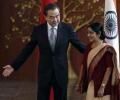
The entire gamut of bilateral ties including the contentious boundary issue was discussed during a "cordial and substantive" engagement between the foreign ministers of India and China in New Delhi who met within two weeks of installation of the Narendra Modi government.

A Chinese official stated that India and China should view each other as cooperative partners and opportunities for development, not rivals or threats. This statement came in response to Russian President Vladimir Putin's comments on the independent and strong ties Russia maintains with both nations, emphasising non-interference in India-China relations.

The death toll from devastating flash floods in Nepal has surged to 1,050, with nearly 4,000 people, including foreigners and security personnel, still missing. Rescuers are struggling with intermittent rainfall, rising river levels, and difficult terrain, while expert teams from India and China assist in operations, particularly at hydropower project sites where many workers are believed to be trapped in tunnels.

China has criticised the US blockade of the Strait of Hormuz, calling it a dangerous and irresponsible move, and urged Washington and Tehran to honour the ceasefire. Beijing also denied aiding Iran militarily and threatened countermeasures if the US imposes tariffs.
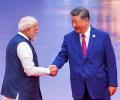
India and China held diplomatic talks to review the situation along the Line of Actual Control (LAC), discussing boundary delimitation, border management, and trans-border cooperation. Both nations stressed the importance of maintaining peace and tranquillity for bilateral relations and agreed to continue using existing channels to resolve outstanding issues.

Dhaka and Beijing on Thursday agreed to strengthen cooperation on the management of the Teesta and other rivers and signed 13 agreements to bolster bilateral ties following talks between Bangladeshi Prime Minister Tarique Rahman and Chinese Premier Li Qiang.
India's dual pursuit of a robust strategic partnership with Washington and a pragmatic, tension-management policy with Beijing represents the essence of modern multi-alignment. By embracing economic pragmatism, learning to compartmentalize political differences, and engaging in continuous dialogue, India can secure its borders, grow its economy, and contribute to a stable, multipolar Asian century, points out Ambassador Rajasekhar.

Prime Minister Narendra Modi says India-China relations have made steady progress in the last 10 months, guided by respect for each other's interests and sensitivities. He made the remarks after meeting with Chinese Foreign Minister Wang Yi.

The economic fallout of the West Asia crisis, the prevailing security situation in the Indo-Pacific and ways to boost cooperation in critical minerals and technology are expected to top the agenda at a crucial meeting of the Quad foreign ministers on Tuesday.
